Chelsea Boots
 Lace-Up Ankle Boots
 Lace-Up Long Boots
 Women’s Knee High Boots
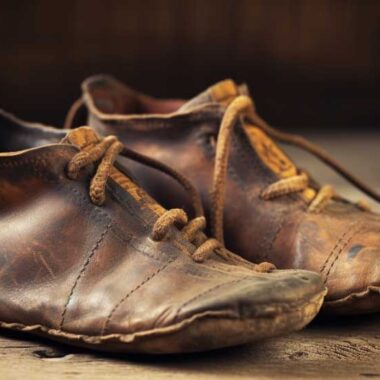
In ancient civilizations, footwear was developed with a clear and pragmatic purpose: to protect the foot from environmental hazards while preserving its natural structure and movement. Early societies understood, often intuitively, that the human foot was designed to function without rigid support or artificial elevation. As a result, shoes were minimal, flexible, and closely connected to the ground. This design philosophy can be seen across many early cultures, from the sand and stone landscapes of Ancient Egypt to the rugged terrains of Mesopotamia, Anatolia, and the Mediterranean world.
In Ancient Egypt, sandals made from leather, papyrus, or palm fibers were thin and lightweight, offering basic protection against heat and rough surfaces without restricting foot motion. These sandals had no elevated heel and allowed the toes to spread naturally, supporting balance and efficient walking. Similarly, in Mesopotamian and Anatolian civilizations, footwear was often flat-soled and soft, crafted to accommodate long periods of walking and standing. Rather than forcing the foot into a predetermined shape, these early shoes adapted to the wearer’s anatomy.
Ancient Greek and Roman footwear further illustrates this principle. Lace-up sandals and soft leather shoes were designed to secure the foot without immobilizing it. The sole remained thin, enabling ground feel and proprioceptive feedback—key elements for maintaining posture, agility, and endurance. Even among Roman soldiers, whose footwear needed to withstand long marches, sandals were flexible and encouraged a natural gait rather than an artificially supported one.
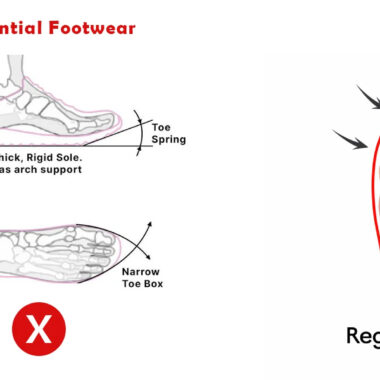
Modern barefoot shoes draw directly from this ancient understanding of human biomechanics. Unlike conventional modern footwear, which often incorporates thick cushioning, rigid soles, arch support, and elevated heels, barefoot shoes aim to replicate the conditions under which the human foot evolved. Thin, flexible soles allow the foot to sense the ground, wide toe boxes give the toes space to splay naturally, and zero-drop construction keeps the heel and forefoot at the same level, promoting proper alignment and posture.
The connection between ancient footwear and barefoot shoes is not merely visual or stylistic; it is fundamentally functional. Both approaches recognize that the foot is not a passive structure in need of constant external support, but an active system of muscles, tendons, and bones designed to stabilize the body and absorb impact naturally. By allowing the foot to move as intended, both ancient shoes and modern barefoot footwear support efficient movement, balance, and long-term foot health.
In this context, barefoot shoes can be seen as a modern reapplication of ancient wisdom rather than a contemporary trend. Advances in materials and manufacturing have made it possible to produce durable, lightweight, and flexible shoes that align with the same principles followed thousands of years ago. As interest grows in natural movement, posture, and functional health, the continuity between ancient footwear traditions and modern barefoot shoes becomes increasingly clear—highlighting a timeless relationship between human anatomy and the way we protect our feet.