Chelsea Boots
 Lace-Up Ankle Boots
 Lace-Up Long Boots
 Women’s Knee High Boots
Barefoot Shoes: A Natural Approach to Foot Health
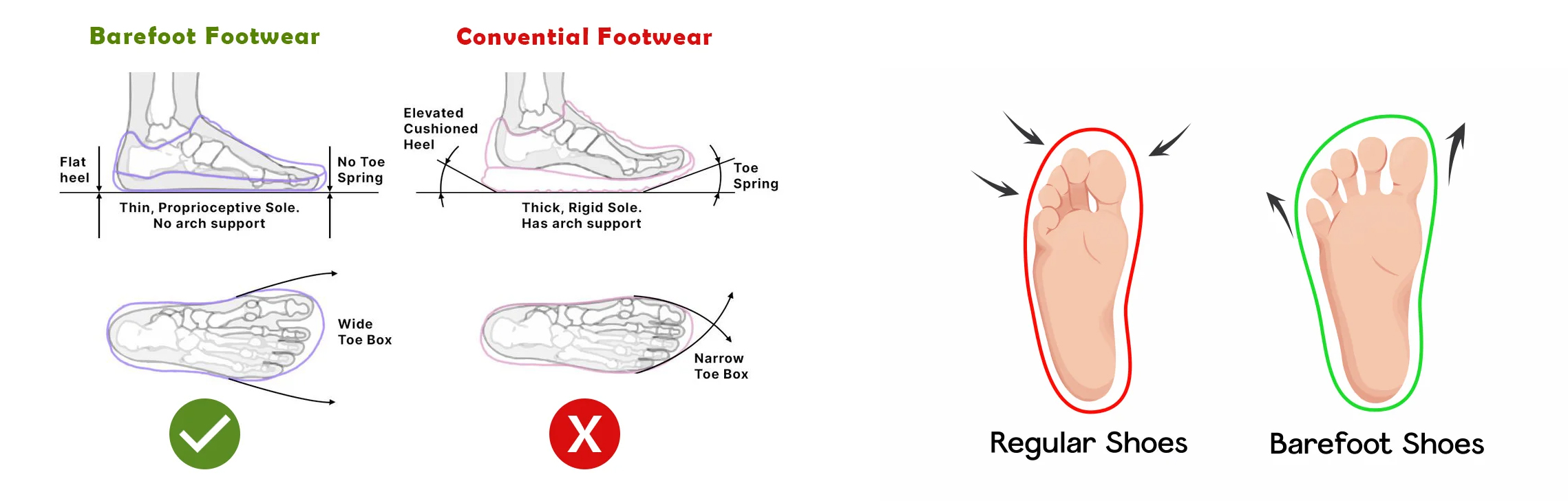
Barefoot shoes, also known as minimalist footwear, are designed to replicate the natural movement of walking barefoot while still providing basic protection from external elements. Unlike conventional shoes, which often feature thick soles, elevated heels, and rigid support structures, barefoot shoes prioritize simplicity and anatomical alignment.
One of the defining characteristics of barefoot shoes is their thin, flexible sole. This design allows the foot to feel the ground beneath it, enhancing sensory feedback and promoting better balance and proprioception. By enabling the foot to move as it was naturally intended, barefoot shoes support the activation of intrinsic foot muscles that are often underutilized in traditional footwear.
Another key feature is the wide toe box. Conventional shoes frequently compress the toes, which can contribute to deformities such as bunions and hammertoes over time. Barefoot shoes allow the toes to spread naturally, improving stability and reducing unnecessary pressure on the forefoot. This natural toe splay plays a critical role in maintaining proper posture and efficient movement patterns.
From a biomechanical perspective, barefoot shoes encourage a more natural gait. The absence of a raised heel promotes midfoot or forefoot striking rather than heel striking, which may reduce excessive impact forces transmitted through the joints. As a result, some users report improvements in posture, balance, and overall movement efficiency.
It is important to note that transitioning to barefoot shoes should be done gradually. Individuals who have worn heavily cushioned or supportive shoes for many years may need time to strengthen their feet and adapt to the increased sensory input. A slow, progressive transition helps reduce the risk of discomfort or injury.
In summary, barefoot shoes offer a minimalist alternative to traditional footwear by supporting natural foot function, improving sensory awareness, and encouraging healthier movement patterns. When used thoughtfully and with proper adaptation, they can be a valuable tool for those seeking a more natural approach to foot health and posture.
Feature of Barefoot Shoes
Wide toe-shaped toe box offers ample room for toes to move.
Zero drop (sole with no difference in height from heel to toe) helps maintain correct body alignment and supports natural gait.
Thin sole (5 mm without serrations) stimulates foot nerve endings and provides an excellent ground feeling.
The flexible upper and sole allow your feet to move and flex naturally, providing better muscle and tendon function.
Lightweight design prevents foot fatigue.
Type: Walking shoes, office shoes, Home shoes, casual shoes
Ruby barefoot yemeni shoes are made of genuine leather. It has a wide toe box for your toes to be comfortable. Thanks to the zero drop leather sole, it provides the right posture for your body. Thanks to the leather sole, they are the most comfortable shoes while walking and working in the office.
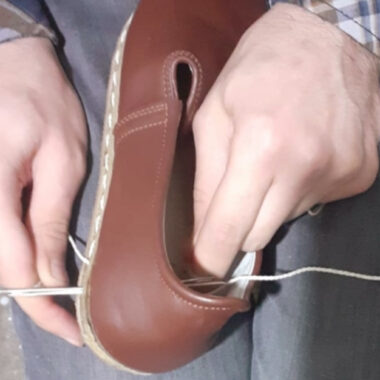
Ruby barefoot leather minimalist shoes are 100% hand crafted from all natural materials, creating a product that is eco-friendly and sustainable, while bringing life to history and culture. Ruby shoes not only have a rich story but also have a unique aesthetic quality, and comfort.
Important Features for Barefoot Shoes
- Minimalist unisex design and different color variations,
- Easily put on and take off without tying,
- Can be easily combined with different clothing styles (elegant, sporty and casual),
- Designed for all-day comfort,
- Leather sole designed for daily barefoot comfort,
- Buffalo leather sole has excellent abrasion resistance while maintaining excellent flexibility,
- Stitched sole for durability,
- If you want, a copper grounding pin can be added to the sole of the shoe.